Learning Spanish for Living or Retiring Abroad: What You Actually Need
Last Updated: March 2026
Written by Carlos A. Rubí, Senior Digital Communications Strategist & Language
Education Writer at Spanish55

Key Takeaways: Learning Spanish for Living or Retiring Abroad
-
You don’t need perfect Spanish to live abroad, but you do need enough confidence to handle daily life independently.
-
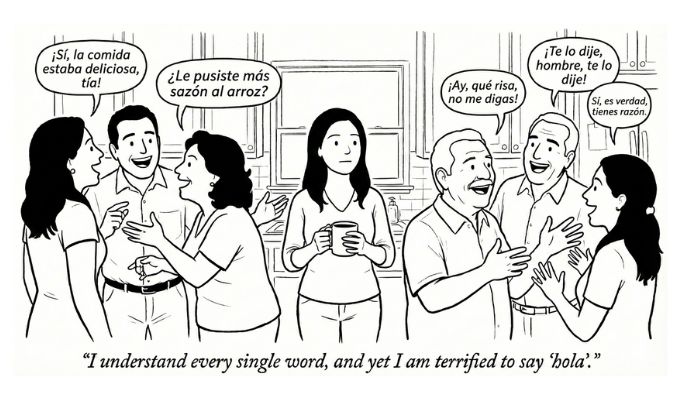
Understanding Spanish is not the same as being able to participate in real conversations.
-
For long-term living, Spanish becomes part of your daily life, not just a travel tool.
-
The goal is not fluency, but comfort, presence, and the ability to stay engaged in real situations.
-
Most adults reach functional speaking confidence within about a year of consistent one-on-one practice.
-
Apps and passive learning tools are not enough for real-life interaction or high-stakes situations.
-
Practicing real conversations with a private Spanish tutor is the most effective way to prepare for living abroad.
For many adults, Spanish enters their life through travel.
At first, it feels optional. Trips are meaningful even when English fills the gaps. You prepare ahead, rely on familiarity, and accept moments of confusion as part of being a visitor.
For a long time, that feels sufficient.
Then something changes.
At Spanish55, we’ve worked with many adults whose relationship with Spanish shifted once travel became a long-term plan. Trish is one of them. She is a lawyer from Colorado who spent years traveling throughout Mexico and Spain with her husband. Over time, those trips stopped feeling like vacations and started feeling like a future.
Today, after working one-on-one with a Spanish55 tutor, Trish speaks Spanish comfortably in everyday situations and travels with more calm, confidence, and integration than before.
Her story reflects what happens when Spanish stops being about visiting and starts being about living. As Trish explains, learning Spanish became “part of the transition” and made the move toward long-term living feel more realistic and grounded.
Do I Need Spanish to Retire Abroad?
This is one of the most common questions adults ask when they start thinking seriously about retirement outside the U.S., especially when considering retiring abroad or moving overseas long term.
The honest answer is that you don’t need perfect Spanish to retire abroad, but you do need enough confidence to live your life without constant friction. Most people don’t worry about grammar or fluency. They worry about whether they’ll feel comfortable, independent, and at ease day to day.
Learning Spanish becomes less about meeting a requirement and more about removing stress from everyday life.
Why Learning Spanish is Different When You Plan to Live Abroad
When you’re traveling, partial understanding is often enough.
You can enjoy culture without fully participating in it. Language gaps are inconvenient, but temporary. There is always an exit strategy.
Once the plan shifts to retirement or long-term living, that distance disappears. This is especially common for Americans considering countries like Mexico or Spain, where extended stays often turn into plans for something more permanent.
Spanish stops being a travel tool and becomes part of daily life and local culture. It is no longer about ordering food or navigating airports. It becomes about excitement for the life you’re building, along with independence, dignity, and belonging.
Understanding Spanish vs. Speaking It: What You Need to Live Abroad
Many adults planning to live abroad already understand a fair amount of Spanish, particularly those spending extended time in popular retirement destinations such as Mexico and Spain.
They follow conversations loosely. Recognize phrases. Catch tone and intent. On paper, this looks like progress.
At Spanish55, this is one of the most common and completely normal starting points we see. Understanding Spanish is a strong foundation, but it’s only the first layer of readiness for living comfortably abroad.
The next step is learning how to respond, ask questions, clarify, and stay engaged when conversations are unscripted, especially in situations that matter. That transition from understanding to participation is where long-term confidence is built.
Passive understanding works well for short stays. Preparing for long-term life abroad requires guided practice that turns comprehension into action and helps with adjusting to life abroad.
Why Feeling at Home Matters More Than Speaking Perfect Spanish
Feeling at home is not about fluency.
It is about presence.
Adults who plan to live abroad don’t want to feel like long-term tourists. They want to feel part of the community and the rhythm of daily life. They want to feel part of the rhythm of daily life. Neighborhoods. Conversations. Small, ordinary moments that make up everyday life and culture.
This is where Spanish becomes emotional, not academic. The goal is not to sound impressive. It is to be comfortable enough that the language fades into the background and you’re simply living real, human experiences.
A real example of this shift
Trish describes how her experience changed once she began learning Spanish seriously. What mattered most was not speaking perfectly, but feeling calmer and more integrated.
Trish describes how simply overhearing everyday conversations made her feel different.
“It could be something completely mundane,” she says, “but I still feel more a part of that city or that town.”
These moments are not about mastery. They are about belonging.
How Planning to Live Abroad Changes Your Motivation to Learn Spanish
When retirement or long-term relocation becomes real, motivation changes shape.
Spanish is no longer a personal enrichment project. It becomes part of a practical transition plan.
Trish is explicit about this shift. When talking about Spain, she explains that their goal is long-term: “Our ultimate goal would be to retire there someday,” and that learning Spanish is part of making that future realistic rather than abstract.
For many adults, this is when anxiety shows up. Not fear of making mistakes, but fear of not being able to function independently. Not being able to ask the right question. Not understanding something important.
Learning Spanish becomes a way to reduce uncertainty, not to chase perfection.
Using Spanish in High-Stakes Situations Abroad (Safety & Independence)
For adults planning to retire or live long-term abroad, some situations carry more weight than others.
Medical appointments. Prescriptions. Emergencies. Legal or financial conversations. Moments where stress is already high and clarity matters.
This is where language anxiety turns into a real concern about safety and independence. Many adults worry less about casual conversation and more about whether they’ll be able to explain symptoms, understand instructions, or advocate for themselves without relying on someone else.
This is where working with an experienced Spanish teacher becomes especially valuable, allowing adults to practice these situations safely before facing them in real life.
Spanish55 approaches this directly. Rather than assuming confidence will magically transfer, we practice high-stakes scenarios in a controlled, supportive environment. Learners rehearse real conversations calmly, with time to ask questions, repeat, and build familiarity.
Confidence in these moments does not come from memorizing vocabulary. It comes from guided exposure, repetition, and knowing you can stay present even under pressure.
This is how adults protect their dignity, privacy, and autonomy as they transition into life abroad.
Why Apps and Short-Term Spanish Tools Fall Short for Long-Term Living
Most apps are built for quick wins.
They reward streaks, recognition, and isolated practice. They do not prepare learners for real conversations, fatigue, or unpredictability.
Adults planning to live abroad need something different.
They benefit from practicing real conversations in a supportive setting, building comfort and responding naturally, even on low-energy days or when the right word doesn’t come immediately.
This is where passive learning reaches its limit. Real confidence comes from guided exposure in a controlled, supportive environment, exactly what working one-on-one with an experienced online Spanish tutor for adults is designed to provide.
Why Conversation-First Spanish Learning Works for Living Abroad
Adults preparing for long-term living don’t need more content. They need practice in realistic conditions.
Conversation-first learning mirrors how humans naturally learn to communicate.
Instead of starting with rules, charts, or isolated drills, learning happens through use, not rehearsal. We build the ability to respond in real time, tolerate imperfection, and stay engaged in the interaction.
In practice, this means:
-
responding instead of mentally scripting, so Spanish becomes something you use, not something you prepare for
-
staying present instead of pausing to translate, which reduces hesitation and builds natural flow
-
building calm before building complexity, because confidence and comfort are what allow progress to stick
This is how Spanish moves from something you think about to something you simply use in everyday life.
Working one-on-one with a patient tutor allows private Spanish lessons to adapt to energy levels, real-life scenarios, and long-term goals. This flexibility mirrors real life abroad, where not every day looks the same.
Confidence builds gradually, then shows up when it matters, especially when independence and safety are on the line.
How Long Does It Take to Feel Comfortable Speaking Spanish?
This is one of the most common and most reasonable questions adults ask when they’re planning a move abroad.
The short answer is that becoming fluent enough to live comfortably abroad is very different from becoming perfectly accurate in Spanish.
At Spanish55, we’ve seen this pattern consistently. When adults invest about a year of regular, one-on-one Spanish lessons, typically two to three times per week with a qualified Spanish tutor over Zoom, they reach a level of fluency and confidence that allows them to live abroad and function independently.
That does not mean speaking perfect Spanish.
It means being fluent enough to communicate, interact, and stay engaged, even when sentences aren’t perfect. Fluency is about flow and confidence. Accuracy is about correctness. At this stage of your life, fluency is what gives you independence.
In fact, focusing too early on accuracy often backfires. Adults start monitoring every word, second-guessing themselves, and freezing mid-sentence. That loss of confidence is the opposite of what you want as you prepare for life abroad.
At Spanish55, we guide learners toward comfortable production first, because once you’re speaking freely, the gaps naturally reveal themselves. That’s a good thing. Those gaps tell us exactly what to work on next.
This approach prevents stagnation and builds momentum, which is far more valuable than sounding perfect.
Why One-on-One Spanish Lessons Are the Most Efficient Way to Prepare
When you’re planning a major life transition, time matters. Most adults at this stage are not looking to experiment endlessly with different methods. If you're starting in your 50s or later, it's worth reading about what a tutor does differently for adults over 50.
You can read as many books as you want about building a six-pack, but if you never do a single crunch, nothing changes. Language works the same way.
If your goal is to speak Spanish with confidence, you have to start speaking, ideally in a safe, supportive environment.
This is why private, one-on-one tutoring matters. A qualified Spanish teacher and tutor knows:
-
when to correct you and when not to
-
how to correct without interrupting confidence (this takes skill!)
-
when to push you and when to let you speak
-
how to adapt to your pace, energy, and goals
At Spanish55, this is exactly how lessons are designed. You work with a real human who understands your background, your timeline, and your reason for learning Spanish. This is not just a native speaker. It is a professional language tutor who specializes in working with Americans like you. Lessons are private, affordable, and focused on practicing real conversation, not just evaluating your performance.
This approach helps adults avoid analysis paralysis and build the comfort they need before their move, not after.
What Progress Looks Like Before You Move Abroad
Progress rarely feels dramatic.
It shows up as less tension. More ease. Fewer moments of freezing. More willingness to try.
Travel becomes calmer. Conversations feel lighter. Spanish stops feeling like an obstacle and starts feeling like a bridge.
For adults planning long-term living, this is the signal they’re looking for. Not fluency, but readiness.
Living in a Spanish-Speaking Country Is About Belonging, Not Fluency

Trish, whose travels evolved into a plan for living abroad.
Fluency is not the entry requirement for living abroad.
Belonging is.
Belonging comes from being willing to participate even when you’re imperfect. As Trish puts it, at some point “you just have to jump in” and accept that you won’t say everything correctly, but you stay in the interaction anyway.
For adults planning to retire or live long-term in a Spanish-speaking country, Spanish is not an academic pursuit. It is a life skill that supports independence, confidence, and peace of mind.
If this situation resonates, the next step is not more isolated study. It is practicing Spanish in a space designed for adults preparing for real life abroad, exactly the experience we’ve designed for people like you at Spanish55. We’ve done this successfully since 2014.
A free trial lesson with Spanish55 is a stress-free Zoom call that offers a calm, conversation-first environment to begin building the confidence long-term living requires, with availability as soon as tomorrow.
If you’re ready to explore what that feels like, you can schedule a free trial lesson with Spanish55 here:
If you see yourself in Trish’s story, we invite you to watch her full conversation on YouTube. It’s an honest, personal look at what learning Spanish as an adult really feels like, and how that shift begins.
Common Questions About Learning Spanish for Living Abroad
Do I need to be fluent in Spanish to live abroad?
No. You don’t need perfect Spanish to live abroad, but you do need enough confidence to handle daily situations and communicate independently. The goal is not fluency, but being able to participate, ask questions, and stay engaged in real conversations.
How long does it take to feel comfortable speaking Spanish?
Most adults feel comfortable speaking Spanish within about a year of consistent one-on-one practice, typically 2–3 lessons per week. At that point, the focus is on communication and confidence, not perfect accuracy.
I understand Spanish but can’t speak it, what should I do?
This is very common, especially for adults who have studied Spanish before. The next step is guided speaking practice that helps you turn passive understanding into real conversation ability. This transition is what builds confidence for real-life situations.
Are apps enough if I plan to live abroad?
Apps can be helpful early on, especially for vocabulary and basic structure. However, they don’t prepare you for real conversations or unpredictable situations. Speaking regularly with a tutor is what builds confidence and real communication skills.
What’s the best way to prepare for real-life situations abroad?
The most effective way is to practice real conversations with a tutor in a structured but supportive environment. This includes everyday situations as well as high-stakes moments like appointments, asking for help, or handling unexpected issues.
What happens in a Spanish55 free trial lesson?
It’s a 55-minute, one-on-one session where you speak Spanish, clarify your goals, and receive a personalized learning plan. The lesson is designed to be calm, practical, and pressure-free, so you can experience how learning would actually feel.